
Filling the Gap: Mobile Aerostats for Defense Surveillance
There's a gap in defense surveillance that nobody talks about. If you need persistent radar coverage over a forward base, you have three options. Ground systems can't see far enough because of terrain. Aircraft work but they can't stay up 24/7. Satellites can see everything but they're too far away for tactical ops and you can't task them when you need them. So you end up choosing between coverage gaps or burning money on aircraft hours.
Why Aerostats
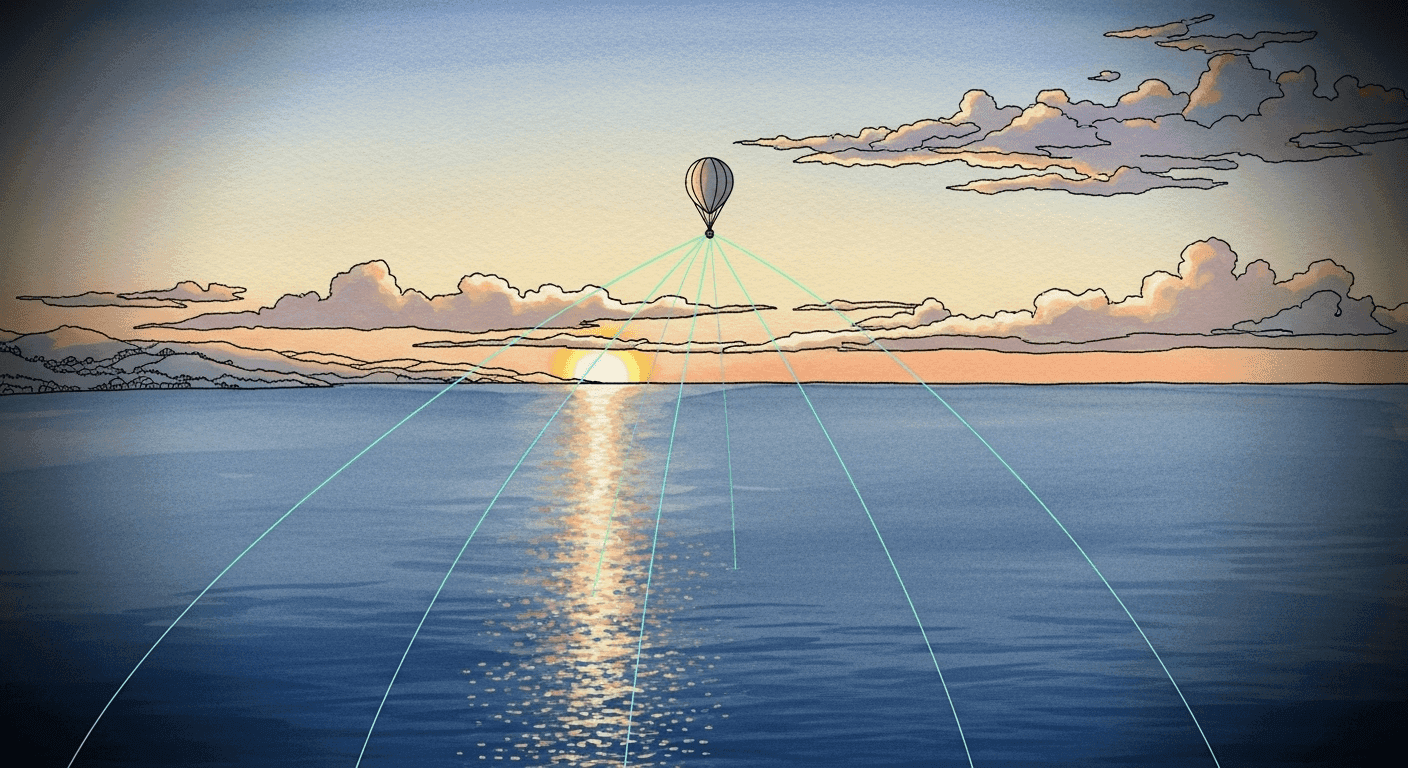
The solution is simpler than you'd think. Take a balloon, tether it to a truck, fly it at 2-3 kilometers altitude. High enough to see 100+ kilometers beyond the horizon. Low enough that a small crew can deploy it in two hours. It stays up for weeks because it's tethered to ground power. And when you need to move it, you just pack up and drive.
Mount a radar on that platform and suddenly you have persistent coverage over tactical distances. Not satellite-scale surveillance. Not temporary UAV coverage. Something in between that actually works for defense operations.
The economics matter too. An aerostat system costs thousands per day to operate, not lakhs. You can keep it on station for months without worrying about flight hours or fuel costs.
Why This Matters for India
India's borders aren't flat terrain with good radar coverage. The LAC is high-altitude mountains where ground radar can't see much. The LOC needs constant watch for infiltration. Coastal surveillance needs extended range. Forward airbases need early warning when they're operating near the border.
The defense forces have known about aerostats for decades. The US uses them. Israel uses them. But those systems are designed for different terrain and different requirements. And they're priced for Western defense budgets.
We're building for the environment where Indian forces actually operate. Systems that work at 15,000 feet in the Himalayas. Stabilization for 40-knot winds. Tethers that deploy on terrain where helicopters struggle. Trucks that can go where Army convoys go.
What We're Actually Building
We're not trying to replace UAVs or satellites or ground radar. Each has its place. We're filling the specific gap where you need persistent coverage over 50-150 kilometer ranges, you need to set it up fast, and you need to run it for weeks without a huge logistics tail.
Vehicle-mounted platforms. Three-person crew. Two-hour deployment. Payload interfaces that work with existing defense radar systems. Integration that meets IAF standards.
The next year is about proving it works in real conditions. Showing the Air Force we can extend their radar range by 100 kilometers. Showing the Army they can get persistent surveillance where UAVs can't loiter long enough. Giving defense planners a tool that actually fills the gap between what ground systems reach and what space systems deliver. That's what we're building.